Images that read two ways
AI Illusion Generator
Create images built around a visual trick — hidden forms, impossible architecture, forced perspective and surreal scale. Describe both readings and generate the double take.
Original results · Eight illusion types · Still images, no animation
What do you see first?
Two pictures in the same frame
Each image below holds two readings at once. Look, then look again — and open any prompt in the generator to make your own version.
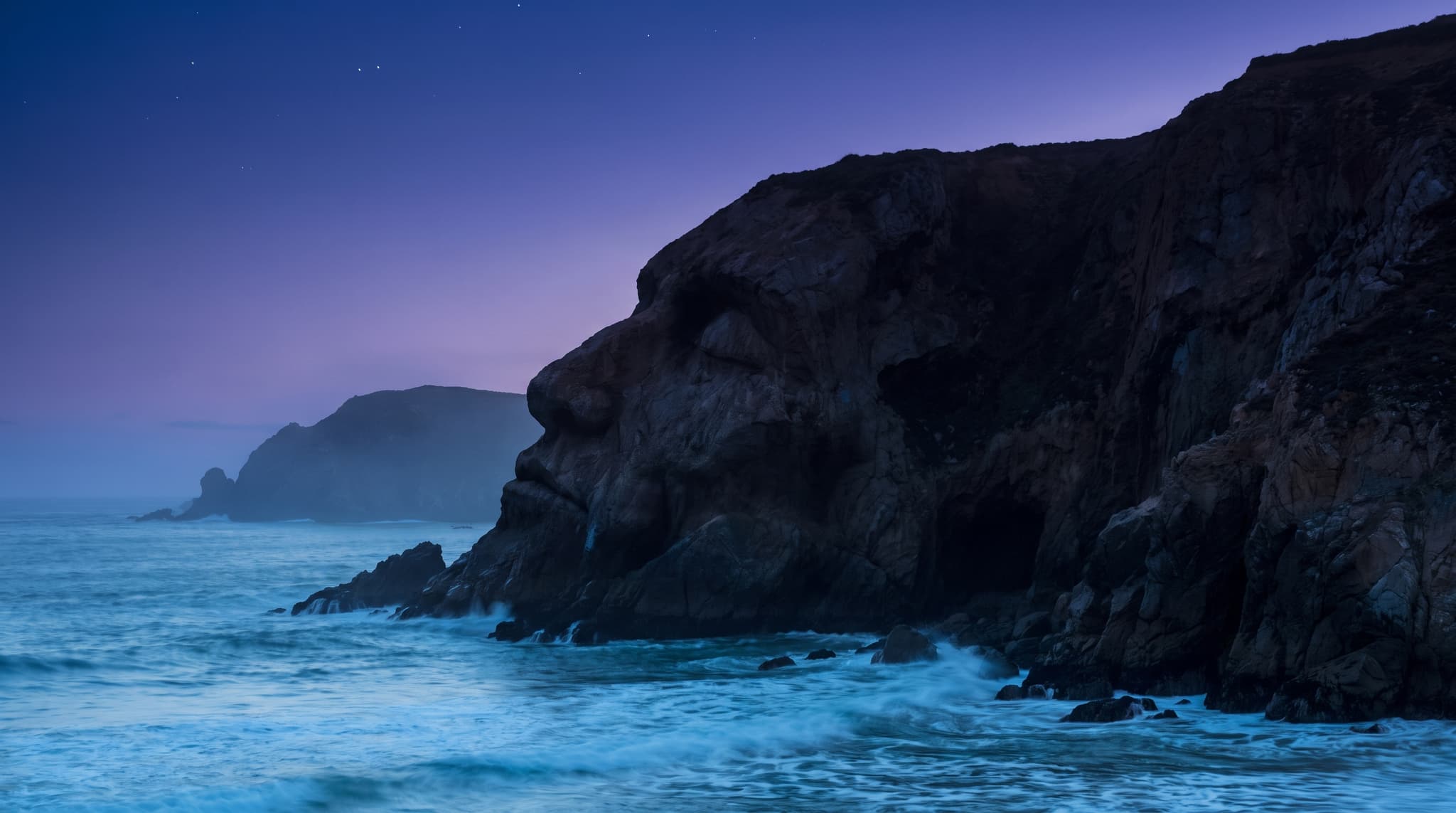
The Headland
16:9 · Double read
Hidden form
A cliff first, a sleeping face second — or the other way round.
Show the promptHide the prompt
A coastal cliff at dusk where the rock face and its shadows also read as a sleeping human profile, hidden form illusion readable only at a distance or when squinting, photographic realism with deep indigo sky and cool cyan sea, wide cinematic framing, no text, no watermark
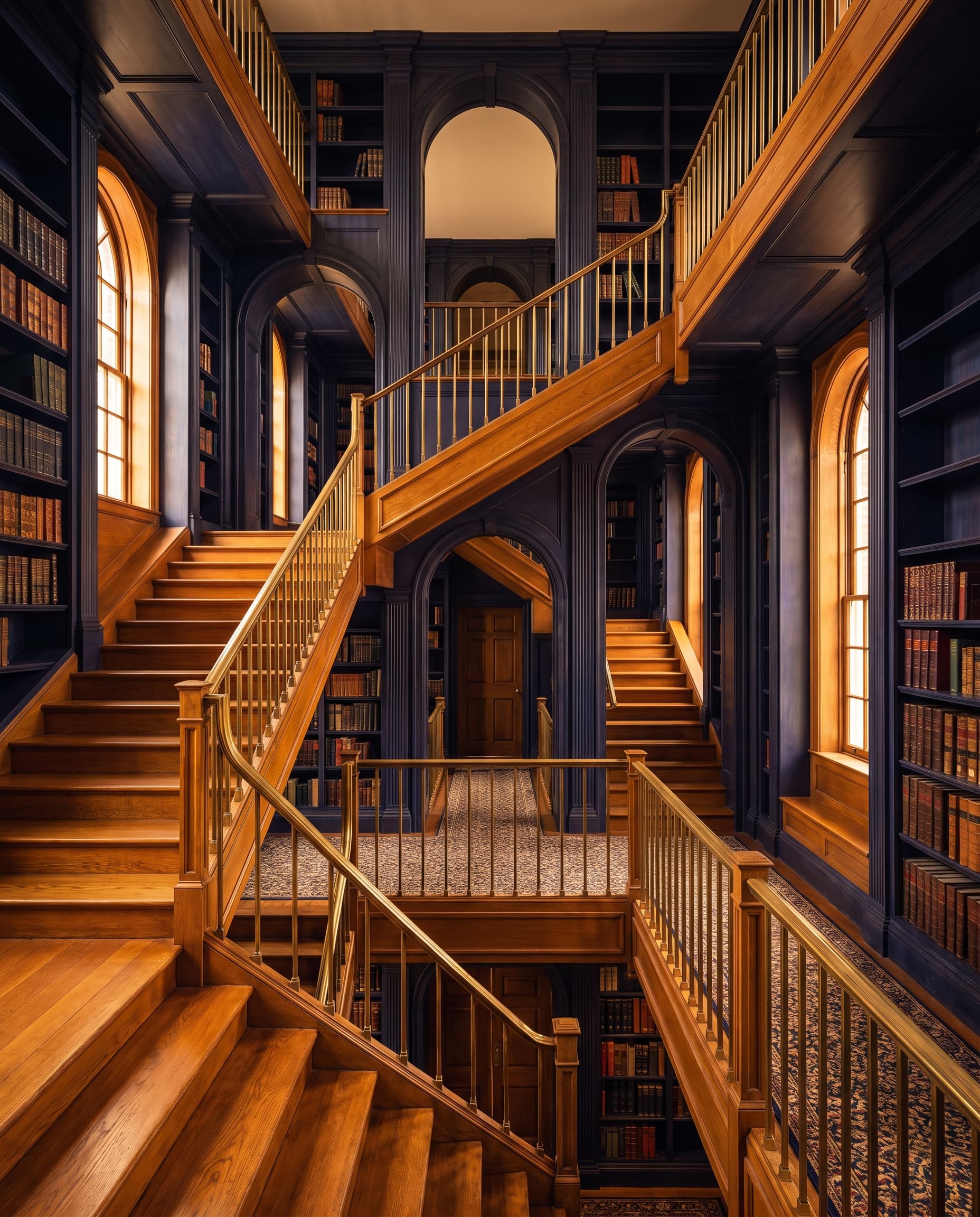
The Reading Loop
4:5 · Geometry
Impossible architecture
Follow the staircase and you end up exactly where you started.
Show the promptHide the prompt
A grand library staircase that loops back into itself so every flight climbs yet returns to the same landing, impossible architecture with connections that cannot exist, consistent directional lighting that sells the geometry, warm oak and deep indigo palette, no text, no watermark
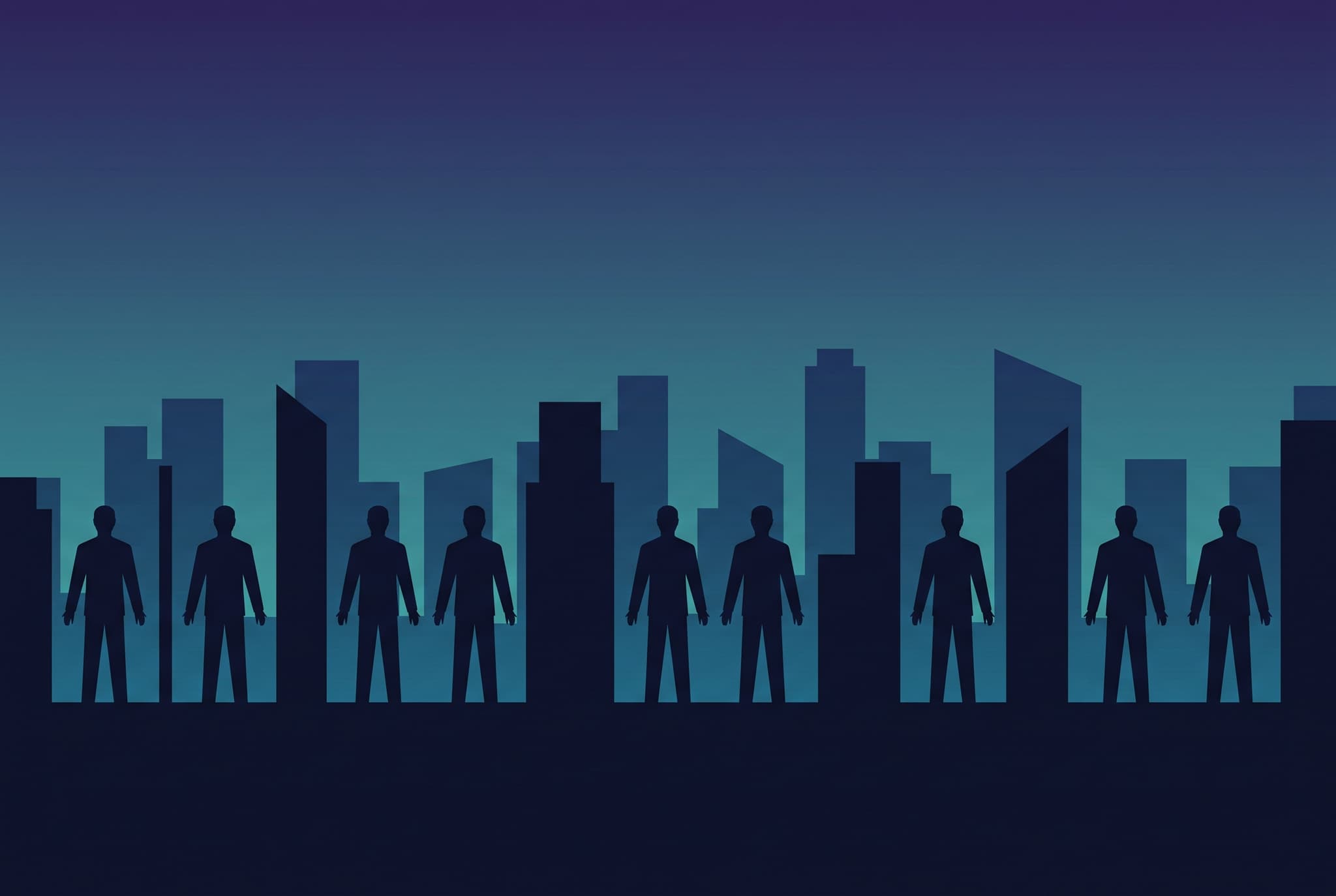
Negative City
3:2 · Ambiguity
Figure and ground
The sky between the towers is doing more work than the towers.
Show the promptHide the prompt
A dark city skyline at twilight where the bright gaps of sky between the buildings form a row of standing human figures, double-image illusion with deliberate ambiguity and balanced figure and ground, teal and indigo gradient sky, flat graphic rendering, no text, no watermark
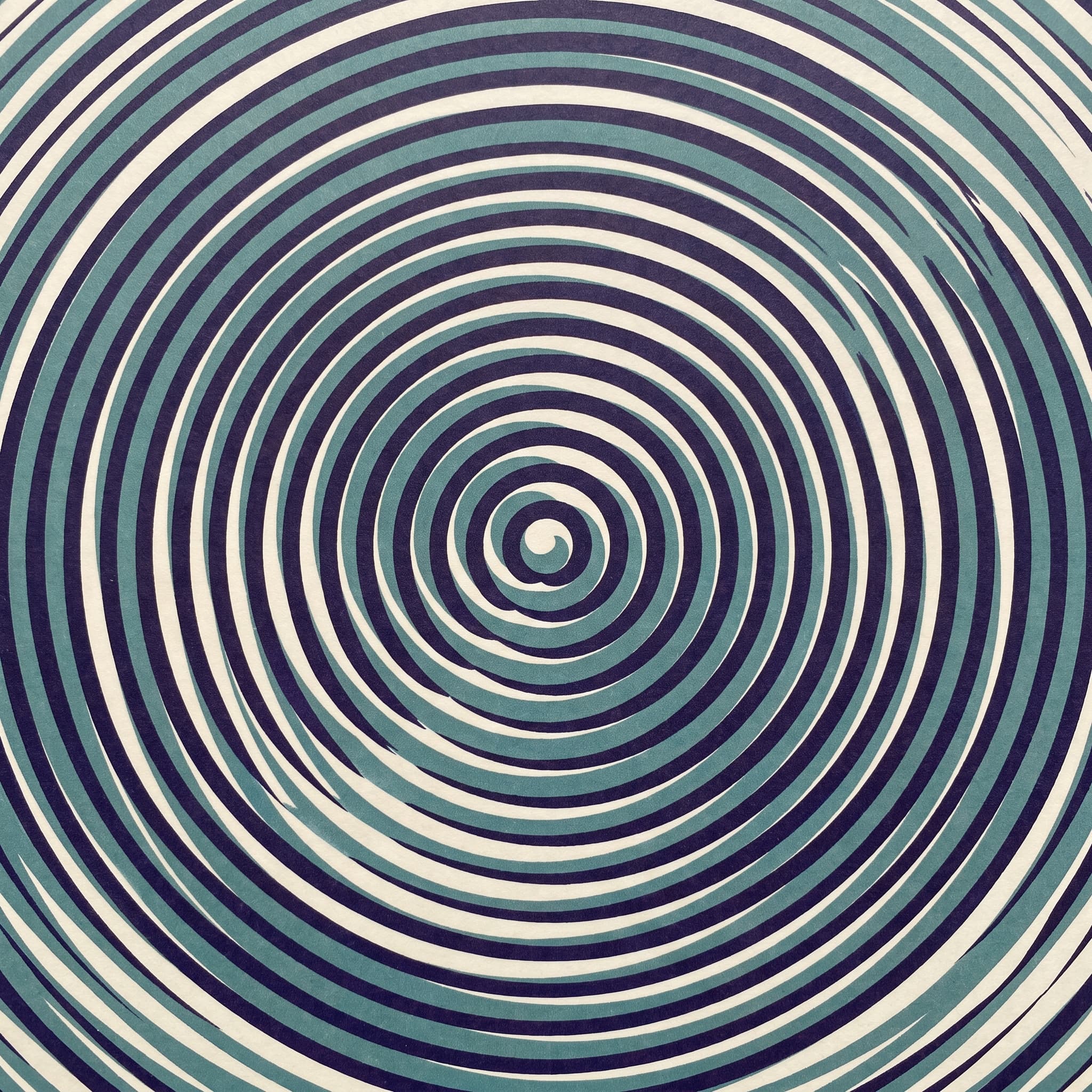
Still Drift
1:1 · Pattern
Geometric pattern
Nothing here moves, though it does not entirely look that way.
Show the promptHide the prompt
A precise concentric ring pattern in teal, indigo and cream where each ring is offset slightly and the contrast shifts around its circumference, a static pattern that suggests gentle drift, geometric optical pattern with flat graphic rendering and high contrast, no text, no watermark
Prompt anatomy
Name both readings, or you get neither
An illusion needs two things to be true in the same picture. Asking for “an optical illusion” never says what the second thing is, so the model has nothing to build the trick from.
Before — one reading
“An optical illusion of a cliff”
You get a cliff. Nothing here says what else it should look like, so there is no second reading to find.
After — both readings
“A coastal cliff at dusk where the rock face and its shadows also read as a sleeping human profile, hidden form illusion readable only at a distance or when squinting, photographic realism with deep indigo sky and cool cyan sea, wide cinematic framing, no text, no watermark”
- 01
First reading
“A coastal cliff at dusk”
What the image plainly is.
- 02
Second reading
“the rock face and its shadows also read as a sleeping human profile”
The hidden form, and exactly what carries it.
- 03
The condition
“readable only at a distance or when squinting”
Tells the model how strong the effect should be.
- 04
Rendering
“photographic realism, deep indigo sky, cool cyan sea”
Keeps the scene believable so the trick lands.
Where it goes
Images people stop scrolling for
Social teams, editors, teachers and puzzle makers use the same generator for hooks, covers and explainers.
Social content
Images people stop on and argue about in the replies, which is most of the battle.
Campaign key art
A visual hook that carries a double meaning without needing a caption to explain it.
Editorial and covers
Illustrate a piece about perception, ambiguity or two sides of an argument.
Posters and prints
Pieces that reward standing closer, then stepping back again.
Teaching and explainers
Show how figure and ground, scale cues and perspective actually work.
Puzzles and games
Artwork for puzzle books, escape rooms and hidden-object challenges.
Prompt guide
Four illusions, written out in full
Each prompt names both readings and how the trick is constructed. Copy one, then swap the subject while keeping that structure.
Classic ambiguity
1:1A single cream vase centred on a deep indigo ground, shaped so its silhouette also reads as two faces in profile looking at each other, double-image illusion with balanced figure and ground, flat graphic rendering with crisp edges, no text, no watermark
Forced perspective
3:2A traveller on a ridge appearing to hold the setting sun between finger and thumb, forced perspective photography with near and far objects aligned so scale reads incorrectly, single vanishing point and sharp focus throughout, warm amber sun against cool cyan sky, no text, no watermark
Hidden portrait
4:5An arrangement of books, fruit and a folded cloth on a table, composed so that from a distance the whole arrangement reads as a human face in three-quarter view, hidden portrait illusion readable only when squinting, painterly still-life lighting, muted indigo and ochre, no text, no watermark
Surreal scale
16:9An enormous porcelain teacup resting in an ordinary suburban street as if it had always been there, surreal scale illusion with everyday objects at impossible size, photographic realism with flat overcast daylight so the scale cues stay believable, no text, no watermark
How it works
From two ideas to one image
- 01
Describe both readings
An illusion needs two things to be true at once. Say what the image is, and what it should also look like — for example, a cliff that is also a sleeping face.
- 02
Choose the illusion type and format
Pick how the trick is built — double image, forced perspective, impossible architecture — then set the aspect ratio for where the image will be seen.
- 03
Generate and test the effect
Generate the image, then check it at a distance and as a thumbnail. If only one reading comes through, strengthen the weaker one in the prompt and run it again.
FAQ
Questions about AI illusions
What is an AI illusion generator?
It creates images built around a visual trick — a shape that reads two ways, architecture that cannot exist, or scale that does not add up. You describe both readings and how the trick should be constructed, and the image is generated from that brief.
How do I write a prompt that actually produces an illusion?
Name both readings explicitly and say which one should be obvious first. "A coastal cliff that also reads as a sleeping face in profile, discovered only at a distance" works; "an optical illusion of a cliff" does not, because it never says what the second reading is.
Why does my image only show one of the two readings?
Usually the second reading is under-described. Say where it should appear and what carries it — the silhouette, the gaps, the shadows — and add a cue such as "readable only at a distance". Keeping the palette simple and the shapes bold also helps, because fine detail competes with the effect.
Do these images actually move?
No. Everything generated here is a still image. Motion-style patterns use contrast and repetition to suggest gentle drift, but nothing on the page animates.
Are strong patterns suitable for everyone?
Some people find dense, high-contrast repeating patterns uncomfortable to look at. If you are publishing this kind of image, it is considerate to avoid using it as a large background, to give people a way to scroll past it, and to keep the contrast no higher than the effect needs.
Which illusion type should I start with?
Double image and surreal scale are the most reliable, because both readings can be described plainly. Impossible architecture and anamorphic effects are harder and usually need a few attempts before the geometry holds together convincingly.
Can I use these commercially?
Under the imageat terms of service you own the images you generate and imageat does not claim ownership of them. Commercial use depends on your plan and on the terms, and AI output is not cleared for trademarks or likenesses, so review the terms of service for your specific case.
Everything generated here is a still image; nothing animates. Dense, high-contrast repeating patterns are uncomfortable for some people to look at, so use them sparingly in large backgrounds. Rights and permitted use are governed by the imageat terms of service.
Make someone look twice
Say what the image is, then what it should also be. Generate, check it at a distance, and strengthen whichever reading is losing.