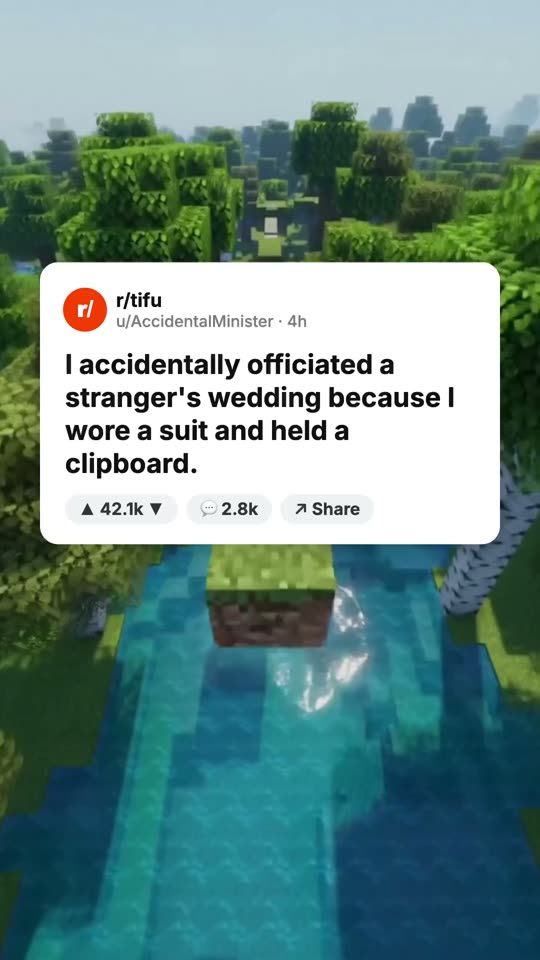
What is a faceless video?
A faceless video is a short where nobody appears on camera and nobody records their own voice. The viewer follows a narrator, captions, pictures, a chat screen or a game-style loop instead of a person talking into a lens. The creator becomes an editor and a writer rather than a performer.
Most faceless shorts are built from the same four layers. Change one layer and you get a different format; keep all four tight and the video holds attention without a face.
- A script that opens on a hook in the first second and pays it off before the viewer swipes.
- A voice that reads the script, or in silent formats, on-screen text that does the same job.
- Visuals such as AI pictures, a post card, chat bubbles, a quiz board or a looping background.
- Captions and sound: word-by-word captions for muted viewers, plus a music bed or chimes.
imageat produces all four layers in one studio, across 11 formats, and hands back a finished 1080×1920 MP4.
Why faceless channels work
Faceless content wins on three things a filmed channel struggles with: output, reach across languages, and privacy. A creator who films needs light, a quiet room and the energy to perform. A faceless creator needs an idea and a few minutes.
Output is no longer the bottleneck
Short-form feeds reward consistency. A channel that posts every day gives the recommendation system far more chances to find an audience than one that posts once a week. When a single video takes minutes instead of an afternoon, daily posting becomes realistic for one person with a day job.
One idea, many languages
Because there is no presenter, the same idea can run in Spanish, Hindi, Turkish or Japanese without a translator or a second host. imageat switches the script, the voice and the captions together across 30 languages, so a channel can test a new market with a handful of uploads.
Platforms pay short-form creators
Both YouTube and TikTok run programs that share revenue with short-form creators. The thresholds below come from their help pages at the time of writing; check the current terms before you plan around them.
| Program | Entry requirement | What it pays on |
|---|---|---|
| YouTube Partner Program (Shorts path) | 1,000 subscribers and 10 million valid public Shorts views in the last 90 days | A share of Shorts ad revenue; creators keep 45% of their allocation |
| YouTube Partner Program (long-form path) | 1,000 subscribers and 4,000 public watch hours in the last 12 months | Ad revenue on long videos, plus Shorts once accepted |
| TikTok Creator Rewards Program | 18 or older, 10,000 followers and 100,000 views in the last 30 days | Qualified videos longer than one minute; originality counts |
| Instagram Reels | No fixed per-view program to cite; varies by region | Bonuses where offered, subscriptions and brand deals |
The rule that decides who gets paid
YouTube's inauthentic content policy, previously called repetitious content, says mass-produced or near-identical videos are not eligible to monetize. TikTok's program also weighs originality. Faceless channels that get paid treat AI as a production crew, not a copy machine: every video gets its own angle, its own script and a reason to exist.
How imageat makes a faceless video
You type an idea, paste your own script or drop in a public product or page link. From there the studio runs a fixed pipeline, and you only make creative choices.
The script
Gemini 3 Flash writes the script for the format you picked: a first-person post for Reddit Story, 12 to 16 messages for Fake Text Story, 3 to 5 questions with four options for Quiz. With a link, it reads the page title, description, body text and main image; pages behind a login can't be read. AI Voiceover reads your own script word for word and splits it into captioned lines. An optional direction line of up to 500 characters steers the tone, the angle, the count or the ending.
The voice
ElevenLabs Eleven v4 reads the script in one of 9 voices: Brian, Liam, Charlie, George, Callum, Jessica, Laura, Sarah or Charlotte. Each has a preview button. Pace can be Normal, Fast at 1.15× or Brainrot at 1.3×.
The pictures and the background
Z-Image Turbo draws the scenes for AI Story, Brainrot, Product Ad, Would You Rather and the other picture-led formats. Story-over-gameplay formats run over one of six original loops made for imageat with an AI video model: Voxel parkour, Train runner, Neon obby, Night drive, Marble run and Kinetic sand. There is no third-party game footage to license, and you pick the loop yourself.
Captions, music and the render
Captions come in Bold (white with a black outline and the active word in lime), Karaoke, Box or Minimal, or you can turn them off. Music can be Suspense, Upbeat, Lo-fi, Epic, Horror, Game show or none. The MP4 is then encoded in your browser in seconds at 1080×1920, 30 fps, H.264 video and AAC audio, with no watermark. Keep the tab open while it renders; the file is saved to your imageat history.
Which format fits which niche
Each of the 11 formats suits a different kind of channel. Pick by the emotion your niche runs on: drama, curiosity, competition or a quick laugh.
| Format | Best niches | Length | Credits |
|---|---|---|---|
| Reddit Story | Relationship drama, workplace stories, confessions | About 30, 60 or 90 s | 10 |
| AI Story | History, space, mysteries, science, scary stories | About 30, 60 or 90 s | 10 / 16 / 22 |
| Brainrot | Fast facts, Gen Z commentary, rapid explainers | About 30, 60 or 90 s | 10 |
| AI Voiceover | Your own scripts: motivation, tips, commentary | Set by your script | 10 |
| Faceless Product Ad | E-commerce, apps, affiliate offers | About 30 or 60 s | 10 |
| Fake Text Story | Comedy, exes, family chats, pranks | About 30 s | 10 |
| iMessage Chat | Muted scrolling, relationship comedy | About 20–30 s | 3 |
| Fade-in Meme | Relatable humor, niche in-jokes | 6 s | 3 |
| Photo Reveal | Rankings, travel, "guess which" posts | 6 s | 4 |
| Would You Rather | Kids and teens, debate, comment bait | 3–6 dilemmas | 10 |
| Quiz | Trivia, geography, education, language learning | 3–5 questions | 8 |
Choosing your first format
- You like writing drama: start with Reddit Story or Fake Text Story.
- You like learning things: start with AI Story, or the What If preset for science hypotheticals.
- You want comments: Quiz and Would You Rather ask the viewer to answer.
- You want volume on a small budget: Meme at 3 credits and Photo Reveal at 4 let you test many ideas cheaply.
- You sell something: paste the product page into Faceless Product Ad.
How to start a faceless channel in 7 days
A week is enough to go from nothing to a channel with a clear identity and a small library. The plan below assumes about an hour a day.
- 1Day 1, pick a niche and one format. Write down the one question your channel answers, such as "what would happen if" or "who was wrong here". Choose the format from the table above.
- 2Day 2, collect 30 ideas. Write premises as full sentences with a specific detail. "My neighbor billed me for shoveling my own driveway" beats "neighbor story".
- 3Day 3, find your settings. Generate three test videos with different voices, caption styles and backgrounds. Keep the combination you would watch yourself and stick with it.
- 4Day 4, set up the accounts. Create the channel on TikTok, YouTube and Instagram with the same name, a plain profile image and a one-line bio that says what the viewer gets.
- 5Day 5, make a batch. Use the bulk video generator to create 10 videos from your niche, each with its own angle. Watch every one before you schedule it.
- 6Day 6, post and label. Upload the first videos natively on each platform, write a short caption with a question and add the AI label where the platform asks for it.
- 7Day 7, review. Look at which videos kept viewers past the first three seconds. Write ten new ideas in the style of your best one.
Posting cadence that a solo creator can keep
The right cadence is the one you can hold for months. Start steady, then add volume once you know which ideas work.
| Stage | Posts per day | What to watch |
|---|---|---|
| Weeks 1–2 | 1–2 per platform | Hook retention in the first 3 seconds |
| Weeks 3–6 | 2–3 per platform | Average view duration and rewatches |
| Month 2 onward | 3 or more if quality holds | Follows per video and comment rate |
One 9:16 file works on TikTok, Instagram Reels and YouTube Shorts, so a single video can run on all three. Upload it natively on each platform rather than reposting a downloaded copy from another app.
Hooks and structure for faceless shorts
A faceless short has no smile or eye contact to buy patience. The first line has to do that work.
- State the conflict, not the setup. "I found my name on my sister's wedding seating chart, at the kids' table" lands faster than an introduction.
- Promise a payoff. A question like "what happens if the Moon disappears tonight" tells the viewer the answer is coming.
- Use numbers. "3 dilemmas" or "5 questions" tells viewers how long they are committing to.
- Save the twist for the last 20 percent. Ask for it in the direction line, such as "put the reveal in the last two lines".
- End with a prompt. A question for the comments or a part 2 tease turns a view into a reply or a follow.
How faceless channels make money
Platform payouts are only one of several ways faceless channels earn. Payouts vary widely by niche, country and audience, so treat any single number you see online with caution. imageat does not promise views, virality or income.
| Path | What it needs | How it pays |
|---|---|---|
| Platform revenue share | Meet YouTube or TikTok program thresholds | A share of ad revenue or qualified-view rewards |
| Affiliate links | A niche where viewers buy things | Commission on sales from your link |
| Own products | A store, app or digital product | Sales driven by product ad videos |
| Brand deals | A steady audience in a clear niche | A flat fee per sponsored video |
| Client work | A portfolio of finished videos | Fees for making shorts for other businesses |
Remember that TikTok rewards videos longer than one minute, so pick the 60 or 90 second length on narrated formats if that program is your goal. Check the current terms for each platform, since thresholds and rules change.
Labeling AI content and staying original
TikTok and YouTube both ask creators to label realistic AI-generated content. Scripts, voice-overs and captions on clearly stylized visuals carry less risk, but when you are unsure, turn the label on. It costs nothing and protects the channel.
Common mistakes
- Posting the same premise with small word changes, which reads as repetitive content.
- Changing format, voice and caption style every day, so viewers never learn what the channel is.
- Vague ideas like "a scary story" that give the writer nothing specific.
- Skipping the fact check on history, science and trivia videos.
- Using real living people in made-up events.
- Choosing 30-second videos when the goal is a program that rewards videos over one minute.
- Ignoring AI labels on realistic-looking content.
- Judging a format after three uploads instead of thirty.
Scaling from one video to fifty
Once a niche is working, the bulk video generator takes one niche or product link plus a count per format, up to 10 per format and 50 per run. Each video gets its own angle, two render at a time in your browser, and each is downloadable and saved to your history. For channel planning, see the YouTube automation tool and TikTok automation pages.
What imageat does not do
- It does not post, schedule or connect to your TikTok, YouTube or Instagram accounts, and it has no analytics. You download and post, so you keep full control of your accounts.
- It does not clip long videos into shorts or make landscape long-form videos.
- It does not import or copy Reddit posts; Reddit stories are written fresh from your premise, and imageat is not affiliated with Reddit.
- It does not let you upload your own background footage; you choose from the six original loops.
- It does not put a talking avatar or a synthetic person holding your product in ads.
- It does not place real living people in made-up events.
Credits for a failed generation are refunded automatically. Plans and credit packs are listed on pricing.
Sources
- YouTube Partner Program overview and eligibility
- YouTube Shorts monetization policies
- YouTube channel monetization policies (inauthentic content)
- YouTube: disclosing altered or synthetic content
- TikTok Creator Rewards Program
- TikTok: AI-generated content
Platform programs and thresholds change; check the linked pages for the current terms.